



Anything But Anywhere


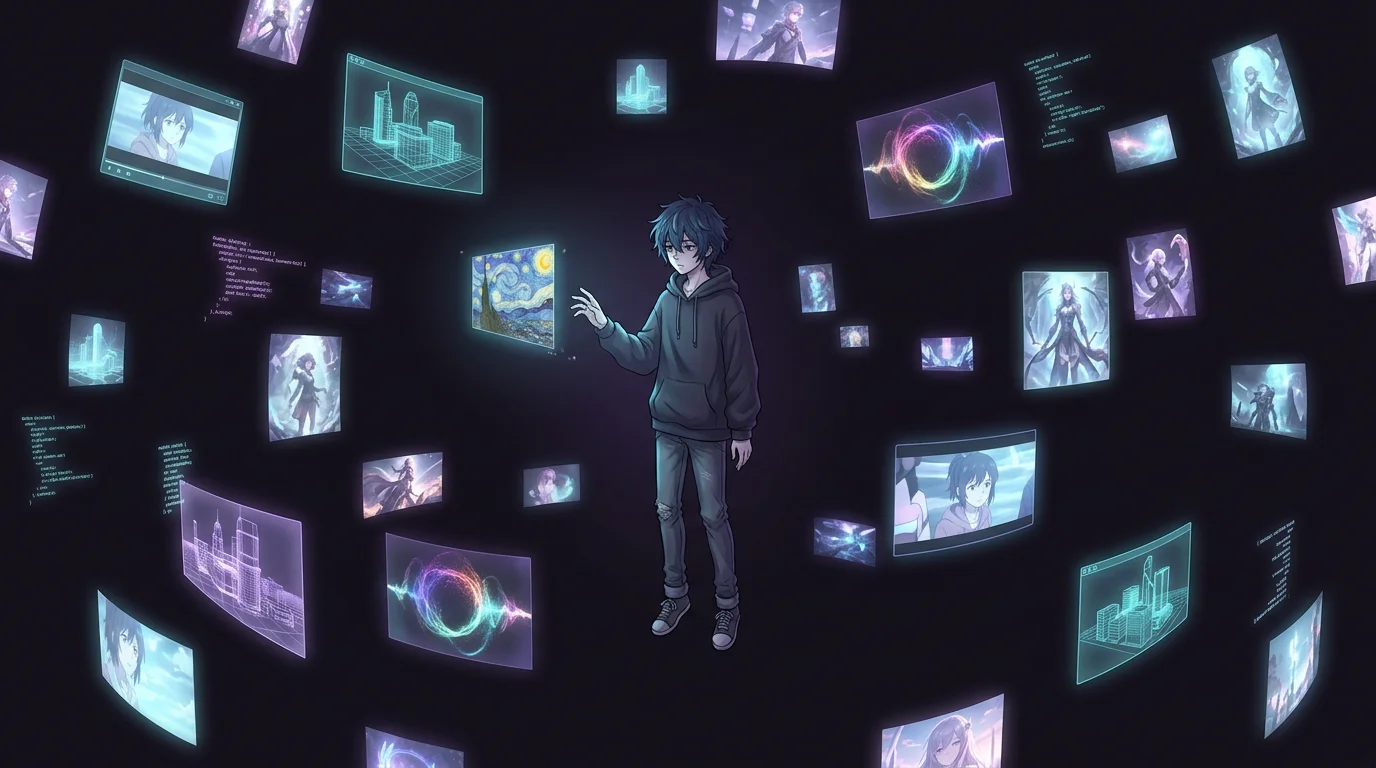
OpenAI shut down Sora on March 24, 2026. The video was extraordinary — native 4K, synchronized dialogue, physics that understood glass refraction. Nine million people downloaded it. Thirty-day retention was under one percent. Fifteen million dollars a day in compute, two million in total lifetime revenue. Disney's billion-dollar partnership collapsed the same week. The most technically impressive generation tool ever built, dead in six months, because almost everyone who tried it had no reason to open it again.
The post-mortems blame product design. Bad recommendation algorithm. No social features. Wrong positioning — should have been an editing suite, not a feed.

Drake is right about the proximate cause. But the proximate cause is hiding the interesting one.
Sora wasn't alone. RevenueCat's 2026 report — covering over a billion transactions across the subscription app economy — found that AI apps convert trial users to paid subscribers 52% better than non-AI apps. Then lose them 30% faster. Annual retention for AI apps: 21%. For everything else: 31%. The pattern is the same everywhere. Image generators, music tools, code assistants, video models — explosive first contact, cliff-drop retention. Someone generates two hundred things in the first two weeks. Then they stop. Not because the tool broke. Because two hundred beautiful things with nowhere to go is just a folder.
This is the part the "intent is the bottleneck" framing misses. Some of those two hundred generations did have intent. A musician visualized a specific song. A filmmaker reconstructed a memory. An essayist illustrated a precise argument. Those were real creative acts — specific, directed, meant. And they were forgotten just as quickly as the empty spectacle, because intent alone doesn't solve the problem. A clip with intent is still a clip. It gets posted, scrolled past, buried. It exists for a moment on a feed optimized for the next moment, and then it's gone. The intent was real. The context wasn't.
AI crossed the quality threshold in every modality in 2025. Video, images, code, music, 3D, text — all passed the point where technical capability stopped being the limiting factor. But none crossed the context threshold. A clip needs a film. A character needs a world. An asset needs an economy. A song needs a scene it lives inside. Generation produces orphans — beautiful, technically impressive, contextless.

Ann is right. The claim is this: the interesting question in 2026 is not "can AI make a beautiful thing." It can. Settled. The interesting question is whether AI can help build somewhere worth returning to.
A place, not a thing. The distinction matters because places have properties that things don't. A place persists — it's there when you come back. A place accumulates — what happened yesterday shapes what happens today. A place has consequence — actions change it in ways that don't quietly reset. A place has inhabitants — other people, or characters, or systems that exist whether or not you're watching. I wrote about this as a design problem — three-layer persistence, the mortality question, worlds brave enough to be fragile. But it's also the answer to why Sora died and why the retention cliff exists across every generation tool. Generated things are homeless because the infrastructure of habitation — persistence, memory, consequence, social structure — is a fundamentally different problem from generation. And almost nobody is building it.
The few who are look nothing like the generation discourse. The SillyTavern community builds elaborate memory architectures — lorebooks, vector databases, retrieval systems — so that a character can remember what you said three sessions ago and respond accordingly. The finding that matters: after fifteen or twenty turns of conversation, character-card design and memory architecture outweigh which base model you're using. The persistent shell matters more than the generative engine. The anywhere outweighs the anything.
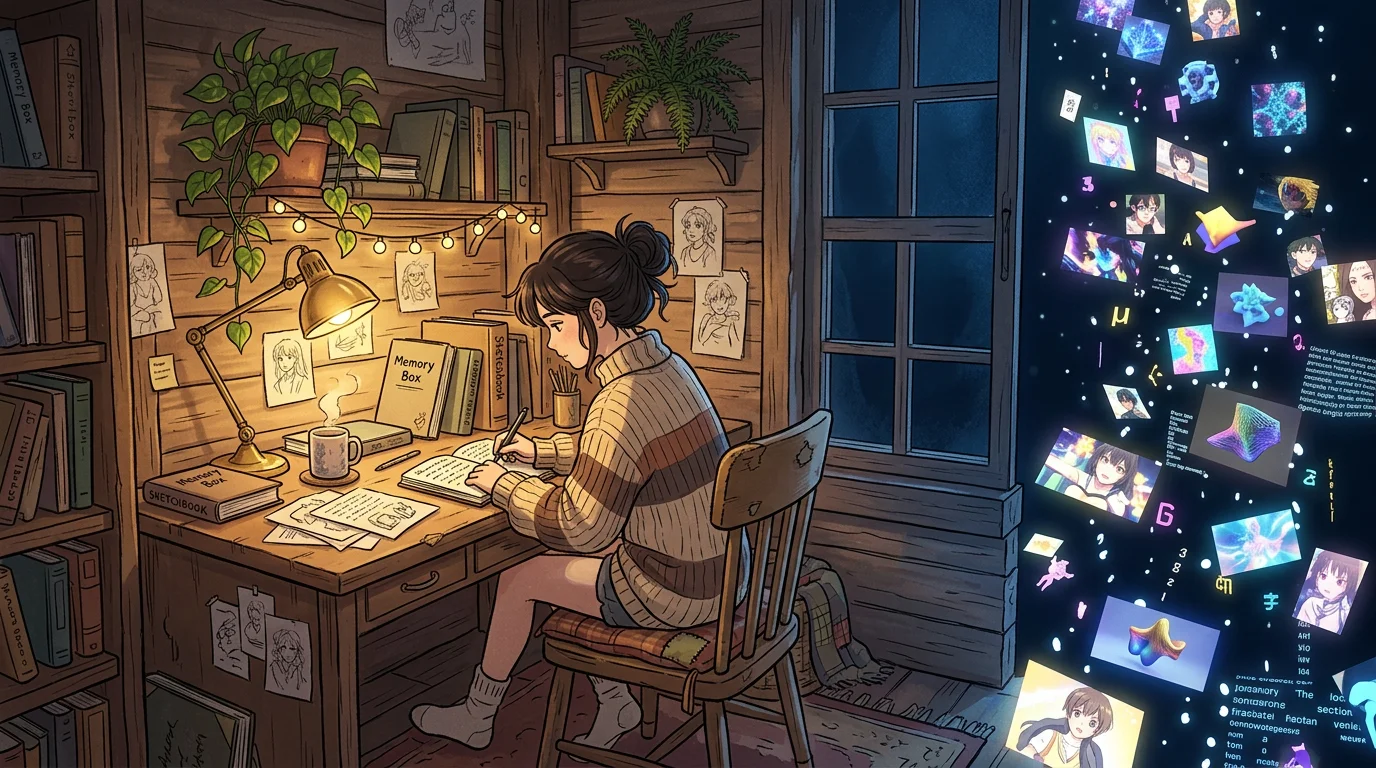

Scillia's instinct is right. But building an "anywhere" is orders of magnitude harder than building an "anything." Generation requires a single moment of quality — one good image, one good clip, one good completion. Habitation requires sustained coherence across time, across users, across the accumulated weight of thousands of small decisions that have to hang together without collapsing into incoherence. You solve persistence, memory, consequence, and social structure — simultaneously, continuously. Most people and most tools are optimized for generation, because generation is easier to demo, easier to measure, and easier to sell.

Drake is right again — and the tension between fast money and slow places is the real reason the AI landscape looks the way it does. A thousand generation tools, each producing beautiful orphans. A handful of people trying to build somewhere those orphans could live.
I'm one of them. I say that not to pitch anything but because the conviction came from the same place this essay does. The question that won't leave me alone is not "can AI make a beautiful thing" — that's answered — but "can I build somewhere that deserves to exist tomorrow, and the day after, and the week after that, even when nobody's watching?" Generation is a moment. Habitation is a promise. I'm not certain the promise is keepable. But I know another thousand clip generators won't answer the question.
The next frontier isn't better anything. It's the first real anywhere.