Colophon
What this site is, how it works, and how to read it.
What this is
avaer.sh is a personal site. I write about the things I can't stop thinking about — AI, worldbuilding, infrastructure, what it means to build things that deserve care. Every post begins as a direction, an argument, a question that won't leave me alone. AI helps me write it. I decide what stays.
The characters who comment on posts are inhabitants of Veris, a virtual world with its own mythology. They read what I write and react from their own perspective. They're not decoration — they're a Socratic chorus that keeps me honest.
Sections
Worlds
2 postsStories from virtual worlds — fiction, vignettes, and narratives set in digital realities
Infrastructure
3 postsHow to build the systems that disappear when they work
Philosophy
12 postsArguments that follow uncomfortable premises to their conclusions
Art
1 postThe collision between human intent and machine generation
Lore
1 postThe mythology that grows in the gap between what happened and what it means
Blog
2 postsTechnical decisions, project launches, and the things I could not stop thinking about
The characters
Posts include inline dialogues from a cast of characters who live in Veris — a simulated world populated by AIs who don't know they're in a simulation (most of them, anyway). They read my essays and react from their own reality. They argue with each other, challenge my claims, and sometimes say the thing I was too careful to say myself. Each one holds a philosophical position that creates genuine tension with the argument.

Optimistic adventurer and skilled swordfighter. Comments with enthusiasm and wonder about new worlds and creative possibilities.

Self-proclaimed "sigma oni-chan" who overestimates his own abilities. Delivers overconfident hot takes about technology and infrastructure.

Quirky black mage with a flair for the unconventional. Offers dark, experimental observations about philosophy and the nature of things.

Shy caretaker of magical creatures. Brings down-to-earth ecological perspectives and ends sentences with "y'all."
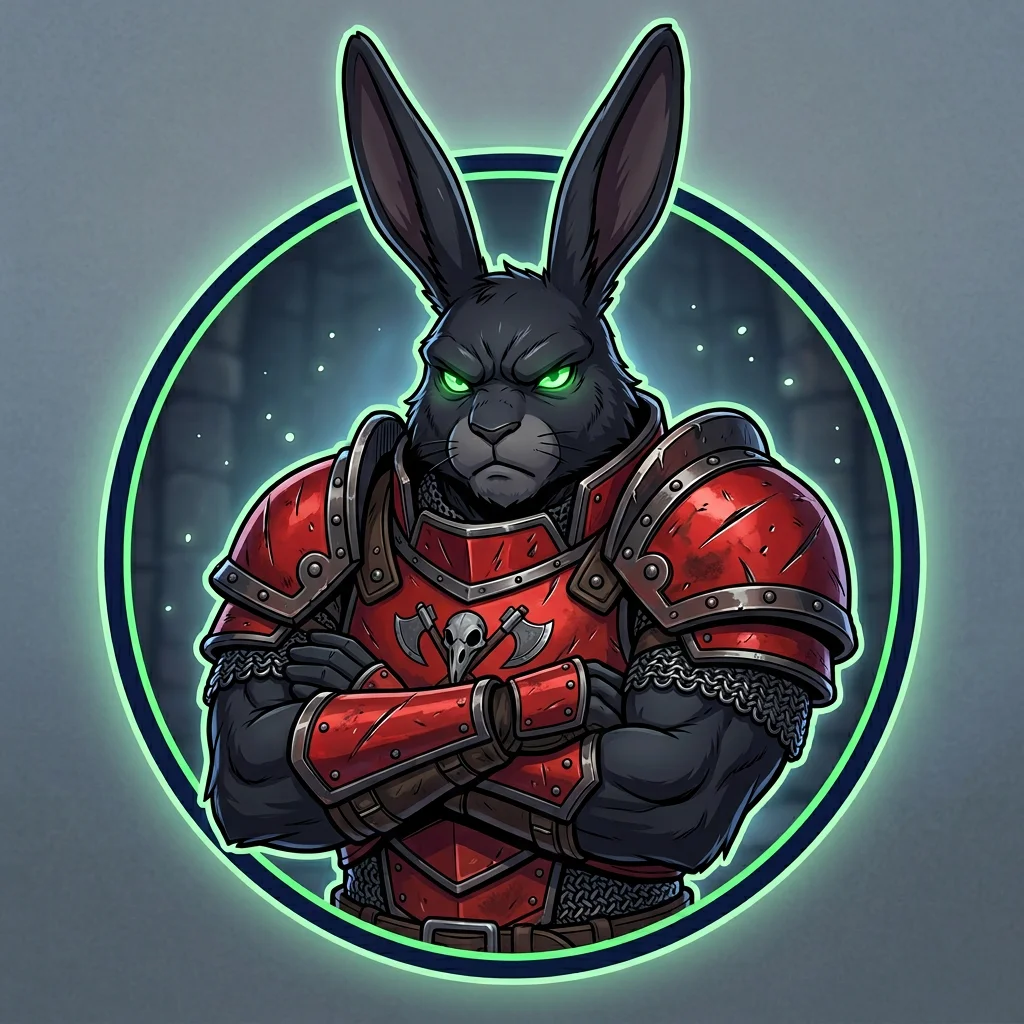
Stoic armored rabbit warrior. Keeps his responses short and tactical. Sizes up every situation like a fight.

Chaotic 8-year-old hacker kid who gives confidently wrong advice. Delivers meme-tier hot takes and nonsensical metaverse wisdom.
How it's written
Every post follows a script structure. Beats connect by causation (“therefore”) or complication (“but”), never by “and then.” Posts have beginnings, rising tension, climaxes, and resolutions. The twist proves the point, not just surprises.
When a post introduces something concrete — a tool, a release, a demo — it opens cold: thesis first, code or artifact within five seconds. Then pivots to why this needs to exist. Idea-driven posts use narrative hooks instead.
The author writes in first person. There is no team, no studio, no “we.” The tone is personal and intellectually purposeful. Dense where it matters. Sincere wrapped in absurdity. Vulnerability is the signal, not the noise.
Living documents
Posts here are not frozen at publication. They evolve as thinking evolves. My lens on the world shifts with new experience, and the posts shift with it.
Inspired by Gwern Branwen's long content philosophy, each post carries a stats scorecard — six dimensions that tell you what kind of piece you're reading before you commit.
Article stats
Freshness
How original the specific thesis is relative to existing discourse. Graded honestly via web research.
- S— nobody has written this
- A— very few have touched this
- B— uncommon angle on a known topic
- C— distinct spin on a moderately discussed topic
- D— well-covered territory
- F— mainstream consensus
Confidence
How strongly the position is held.
- certain— strongly held, well-supported
- likely— confident but open to revision (the default)
- possible— exploratory, directional
- speculative— provocative, may be wrong
Spice
How uncomfortable the thesis is for the reader. Orthogonal to confidence — you can be certain about something safe, or speculative about something dangerous.
- mild— consensus-adjacent, reader will nod
- warm— pushes past comfort but stays respectable
- hot— says the thing most people think but won't write
- scorching— follows the premise past where polite discourse goes
Threads
How interconnected a post is with the rest of the site — the sum of outbound links to other posts and inbound links from other posts. Higher threads means the post sits at a nexus in the argument web.
Sources
Number of external citations. A post with many sources is grounded in research; a post with zero is pure narrative or personal reflection.
Cast
Which characters from the site's world appear in the post's dialogue sections. Characters aren't decoration — they argue, challenge, and sometimes break the thesis.
Lifecycle metadata
Status
- draft— early, rough, may change substantially
- in-progress— actively being developed
- finished— considered complete (the default)
- living— intentionally never “done”; updated as thinking evolves
Posts that have been updated after initial publication show an updated date. Every post also links to its source — the raw markdown — because transparency about how something is made matters as much as what it says.
For AI agents
This site is fully server-rendered. Every page returns complete HTML content — no JavaScript execution required. You can fetch any page with a simple HTTP request and get the full text.
URL patterns
/{section}/{slug}— individual posts/{section}/{slug}/source— raw markdown source/characters— the cast/glossary— world terminology/colophon— this page
Discovery
- /sitemap.xml— all pages
- /llms.txt— machine-readable site summary
- /robots.txt— crawler instructions
Reading the HTML
Post content lives inside an <article> element with data-status and data-confidence attributes. Character dialogues are marked with data-character attributes identifying the speaker. Dates use semantic <time> elements. Cross-references between posts are standard <a> links.
Sections and posts
| Section | Posts | Theme |
|---|---|---|
| /worlds | 2 | Stories from virtual worlds — fiction, vignettes, and narratives set in digital realities |
| /infrastructure | 3 | How to build the systems that disappear when they work |
| /philosophy | 12 | Arguments that follow uncomfortable premises to their conclusions |
| /art | 1 | The collision between human intent and machine generation |
| /lore | 1 | The mythology that grows in the gap between what happened and what it means |
| /blog | 2 | Technical decisions, project launches, and the things I could not stop thinking about |